The Chartists
In 1838 working people wrote a People's Charter and spent a decade organising for it. Most of what they asked for is now law.
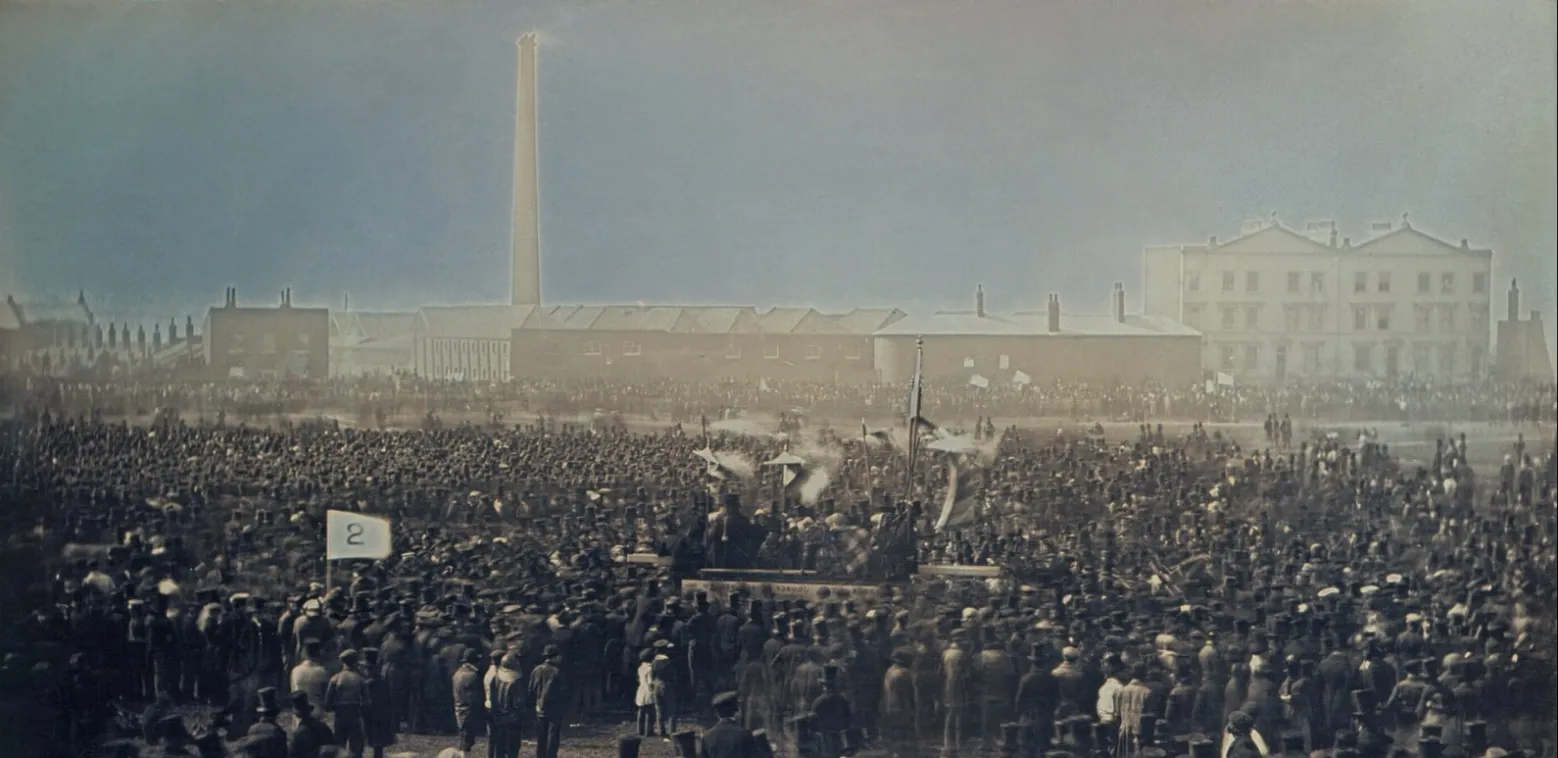
Our first assembly opened with their story, because Our House, the movement CAP is part of, is helping communities across the UK write a new People's Charter.
Who they were
Chartism was the first mass movement of working people in Britain to demand a say in how the country was run. It grew in the late 1830s, when the 1832 Reform Act had given the vote to more property owners but still left out most men and all women.
Support was strongest in the industrial towns of the north and the Midlands, the mining valleys of Wales and the cities of Scotland, and it peaked in the hard years of 1839, 1842 and 1848.
The People's Charter was written in 1838 for the London Working Men's Association by William Lovett and Francis Place, with other members. It gave the movement its name.

The six points
The Charter asked for six changes. Five of them are now law, won one at a time over the following century.
- Won
- Largely won
- Not adopted
- 1858Won
No property qualification to become an MP
Until then, MPs had to own land or property worth a set amount.
- 1872Won
A secret ballot, so no one could be bullied into voting a certain way
Before this, people voted out loud in public.
- 1911Won
Pay for MPs, so working people could afford to serve
MPs were first paid a salary from 1911.
- 1918Won
A vote for every man aged 21 and over
Women got the vote on the same terms in 1928.
- 1944Largely won
Constituencies of equal size
Moved towards from 1885. Independent boundary commissions have drawn them since 1944.
- NeverNot adopted
A general election every year
Parliaments now last up to five years.
How they organised
Chartists held mass meetings, ran newspapers such as The Northern Star, and sent elected delegates to national conventions in London. Their main tool was the petition: three national petitions, carried to Parliament in 1839, 1842 and 1848.
- About 250,000 signatures
- Claimed by the Chartists but not counted by Parliament
- 1839
More than 1.25 million signatures. Parliament refused to consider it.
- 1842
More than 3 million signatures. Rejected again, followed by strikes and arrests.
- 1848
The Chartists said it had nearly 6 million signatures. Parliament rejected it, saying it had counted fewer than 2 million genuine names.
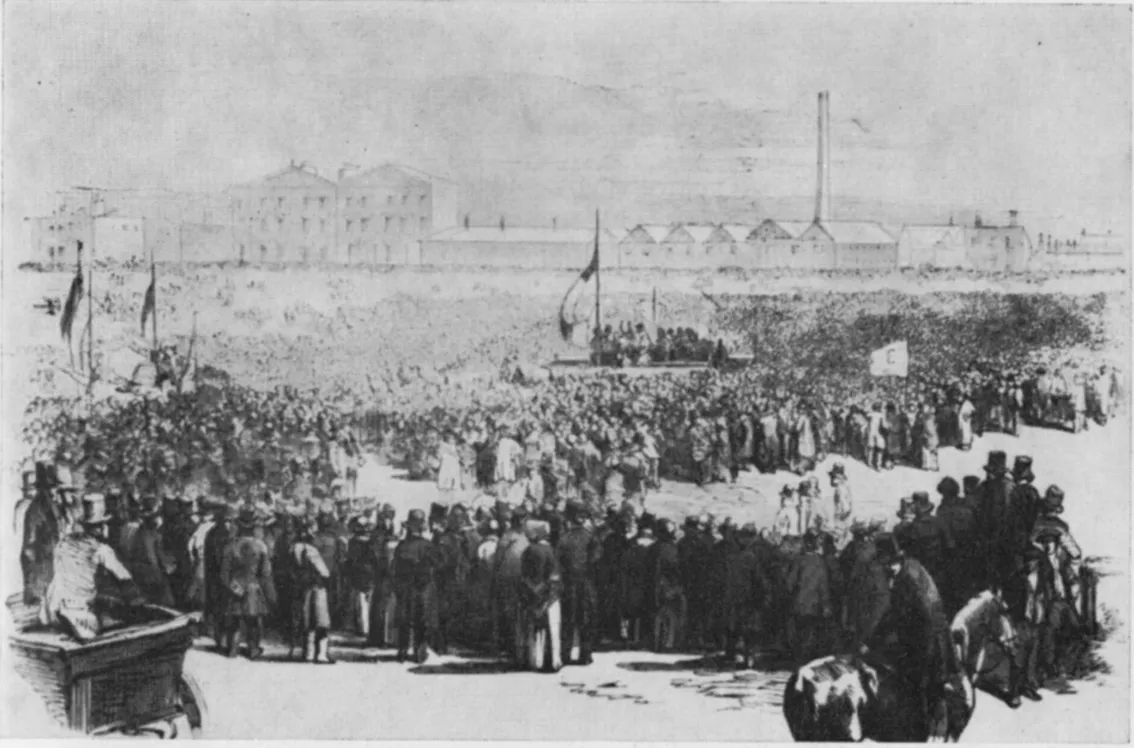
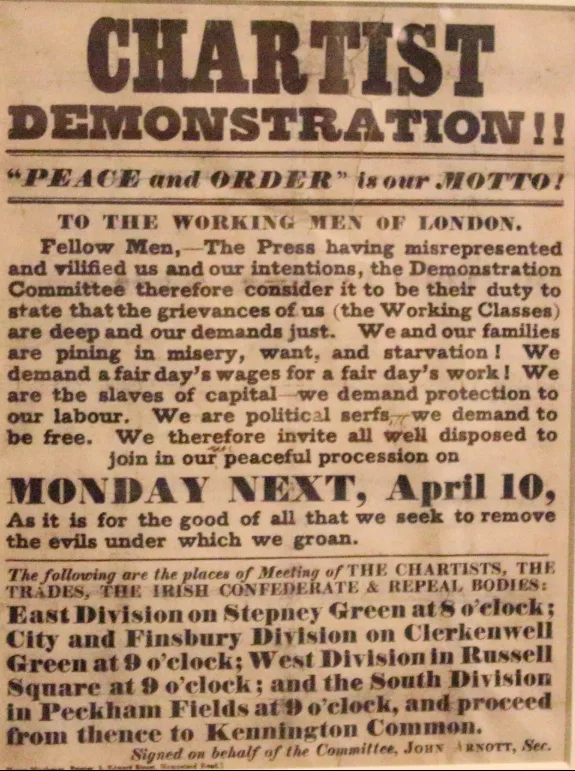
For 1848, the Chartists planned a peaceful mass meeting on Kennington Common in London to deliver the petition. The government put thousands of special constables and troops on standby. The meeting passed off peacefully.
"We demand a fair day's wages for a fair day's work!"
Not only petitions
Not every Chartist believed in peaceful pressure alone. In November 1839 thousands marched on Newport in south Wales to free imprisoned Chartists, and soldiers opened fire, killing at least 22 people. Leaders were transported to Australia.
Women organised their own Chartist groups, even though the Charter asked only for men's votes.

Did they fail?
As an organisation, Chartism faded after 1848. But its demands didn't. Over the following decades, Parliament passed five of the six points one by one. The Chartists showed that working people could organise on a national scale, agree clear demands and keep going for years.
Why it matters for Portsmouth now
Our House's new People's Charter takes its name from the 1838 one. Community assemblies like ours across the UK are agreeing demands about how politics and decisions should work, and those will feed into a national charter.
- Get lots of people involved
- Agree specific demands
- Say clearly who can make the change
- Don't give up when the first answer is no
The Chartists' lessons, still true for any campaign.
Sources
Pictures from the time are in the public domain. Photo credits.